The World’s Weirdest Museums: 8 Collections You Won’t Believe Exist
Travel is often associated with famous landmarks like the Eiffel Tower, the Colosseum, or pristine beaches. While these destinations are popular for a reason, seasoned travelers eventually crave something different. They seek experiences that challenge their perceptions, tell unique stories, or make them laugh. This is where the world of oddities comes in. Across the globe, there are curators dedicated to preserving the strange, the obscure, and the surprisingly mundane.
If you are tired of standard tourist traps and want to explore the eccentric side of human history, this guide is for you. We have compiled a list of the world’s weirdest museums worth a detour. These institutions prove that almost anything can be art, history, or science if you look at it from the right angle.
Why Visit the Weirdest Museums in the World?
Before diving into the list, it is worth understanding the appeal of these unique destinations. Niche museums offer a deep dive into specific subcultures or historical footnotes that major national museums often overlook.
Visiting these places supports local economies and passionate curators who often run these establishments out of pure love for the subject. Furthermore, they provide excellent conversation starters. Telling friends you visited the Louvre is standard; telling them you visited a museum dedicated entirely to dog collars or instant noodles is a story they will remember.
1. Sulabh International Museum of Toilets (New Delhi, India)
Sanitation is a critical part of human civilization, yet it is rarely discussed in polite society. The Sulabh International Museum of Toilets in New Delhi aims to change that. Established by Dr. Bindeshwar Pathak, this museum is dedicated to the history of hygiene and sanitation from 2500 BC to the present day.
The collection is surprisingly fascinating. It details the evolution of the toilet, from gold-plated commodes used by Roman emperors to medieval mobile toilets disguised as treasure chests. The museum also serves a serious social purpose: raising awareness about the importance of sanitation in developing nations.
What You Will See
- Toilets from the Harappan civilization.
- ornate toilets used by European royalty.
- Modern, high-tech Japanese waste management systems.
2. The Museum of Broken Relationships (Zagreb, Croatia)
Most museums celebrate victories, conquests, or artistic masterpieces. The Museum of Broken Relationships does the opposite: it celebrates loss. Located in the beautiful Baroque palace of Kulmer in Zagreb, this museum houses a collection of personal objects left over from former lovers, accompanied by brief descriptions.
The items range from the mundane to the bizarre. You might find a wedding dress, a toaster, or an axe used to chop up an ex-partner’s furniture. The stories attached to these items are sometimes funny, often heartbreaking, but always deeply human. It has become one of Croatia’s most popular attractions because everyone can relate to the universal feeling of heartbreak.
3. The Cancún Underwater Museum of Art (Cancún, Mexico)
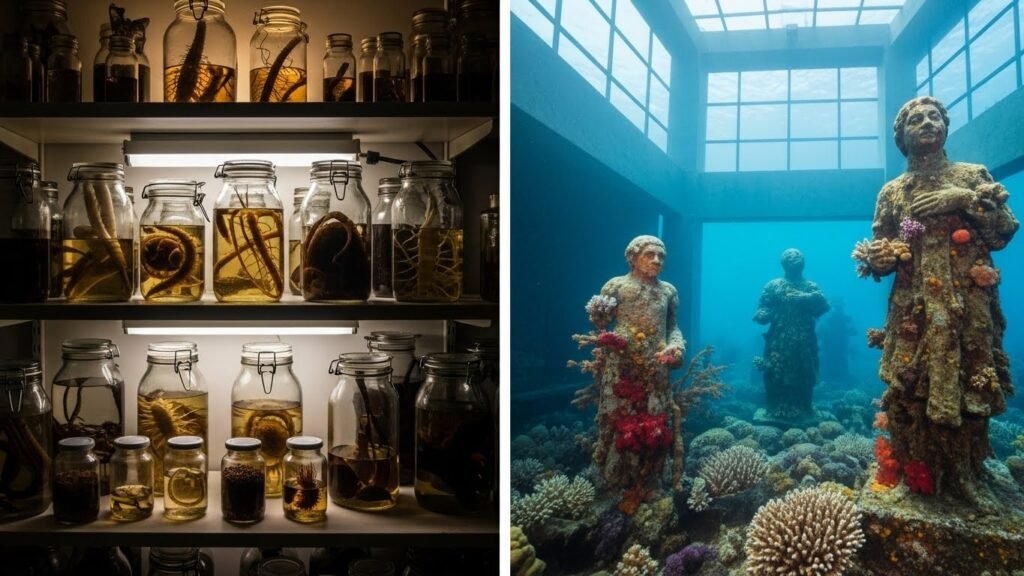
This is the only museum on this list that requires scuba gear or a snorkel to view the exhibits. Known as MUSA (Museo Subacuático de Arte), this installation features over 500 life-sized sculptures submerged off the coast of Cancún.
The project was created to divert divers away from delicate coral reefs that were suffering from over-tourism. The statues are made from pH-neutral marine concrete that encourages coral growth. Over time, nature claims the art, transforming the human figures into artificial reefs teeming with aquatic life. It is a hauntingly beautiful intersection of art and environmental conservation.
4. The Momofuku Ando Instant Ramen Museum (Osaka, Japan)
Japan is famous for its dedication to specific crafts, and instant noodles are no exception. This museum is dedicated to Momofuku Ando, the inventor of Chicken Ramen, the world’s first instant noodle product.
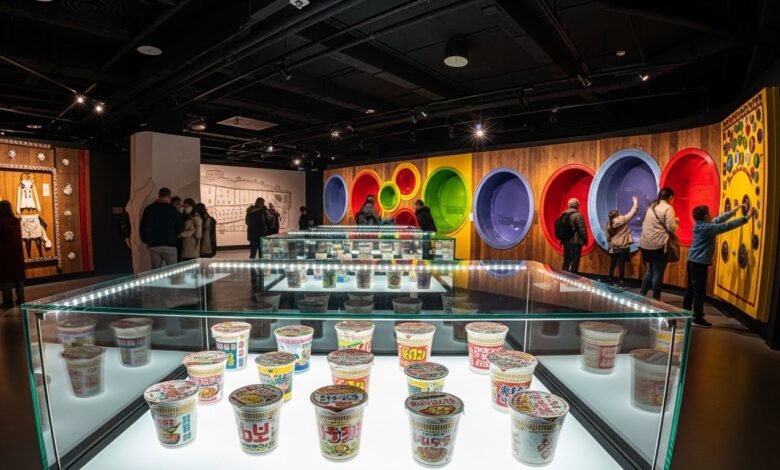
This is an interactive experience perfect for families and foodies. Visitors can walk through a tunnel lined with every package of instant noodles ever created (over 800 varieties). The highlight for most is the “My CUPNOODLES Factory,” where you can design your own packaging and choose your own soup flavor and toppings to create a custom souvenir.
Key Exhibits
- The Birth of Chicken Ramen: A replica of the shed where Momofuku Ando invented the noodles.
- The Instant Noodles Tunnel: A visual timeline of product packaging.
- Tasting Room: A place to sample rare varieties sold only in specific regions of Japan.
5. The Museum of Bad Art (Massachusetts, USA)
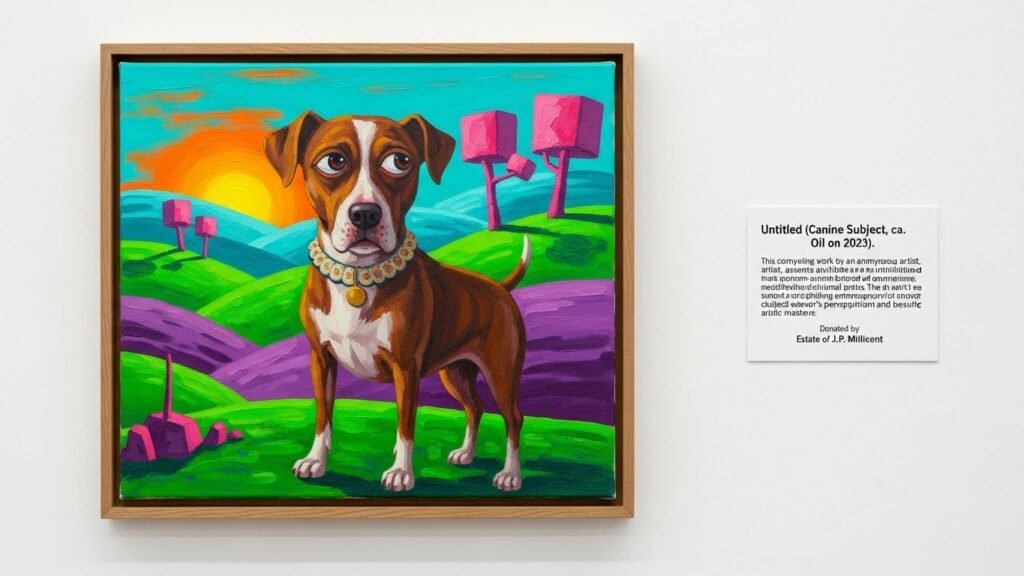
While the Museum of Fine Arts in Boston displays masterpieces, a short drive away lies the Museum of Bad Art (MOBA). Their slogan is “Art too bad to be ignored.” This institution is dedicated to the collection, preservation, exhibition, and celebration of bad art in all its forms.
The pieces here are not just amateur; they are spectacularly wrong. From poor perspective and clashing colors to confusing subject matter, every piece in the gallery has a certain “je ne sais quoi” of failure. However, the curation is done with affection. The detailed captions describing the artistic missteps are often as funny as the paintings themselves.
6. Avanos Hair Museum (Avanos, Turkey)
Deep in the Cappadocia region of Turkey lies one of the creepiest yet most intriguing museums in the world. Located in a pottery shop, the Avanos Hair Museum is a cave covered in locks of hair from over 16,000 women.
The story goes that a friend of the potter, Chez Galip, was leaving town and gave him a lock of her hair as a memento. Visitors to the shop heard the story and started going to their own locks. Today, the walls and ceiling are blanketed in hair samples, each tagged with the donor’s name and address. Twice a year, a “winning” lock is chosen, and the donor is invited back for a free pottery workshop.
7. The Meguro Parasitological Museum (Tokyo, Japan)
For those with a strong stomach, the Meguro Parasitological Museum offers a scientific look at the creatures that live inside other creatures. It is the only museum in the world dedicated solely to parasites.
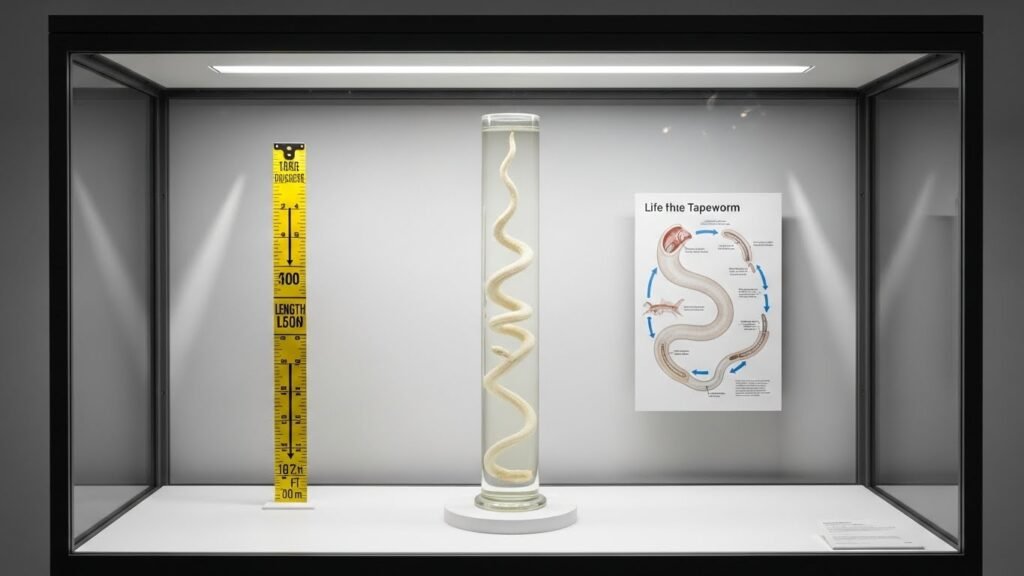
The star attraction is a 28-foot-long tapeworm extracted from a human patient (displayed alongside a rope of the same length to help you visualize the scale). The museum is small, clinical, and fascinatingly educational. It serves as a reminder of nature’s biological complexity, even in its most repulsive forms.
8. The Dog Collar Museum (Kent, United Kingdom)
Located inside the magnificent Leeds Castle, the Dog Collar Museum is exactly what it sounds like. It houses a unique collection of over 130 rare and valuable dog collars spanning five centuries.
The collection reveals a lot about the history of pet ownership. The earliest collars, dating back to the late 15th century, were thick iron bands covered in spikes, designed to protect hunting dogs from wolves and bears. As you move through the timeline to the Baroque and Victorian eras, the collars become decorative fashion statements made of velvet, silver, and leather.
Practical Tips for Visiting Niche Museums
Visiting these offbeat locations requires a bit more planning than your average trip to the British Museum or the Met. Here is how to ensure a smooth experience.
Check Opening Hours Carefully
Unlike major national museums, smaller private collections often have irregular hours. Some may close for lunch breaks, operate only on weekends, or require an appointment. Always check their official website or Google Maps listing before traveling.
Respect the Rules
Just because a museum is “weird” does not mean it lacks rules. The Museum of Broken Relationships, for example, deals with real emotional trauma, so respectful behavior is expected. In places like the Hair Museum, ask for permission before taking photos of personal details.

Support the Mission
Many of these museums are non-profits or small family-run businesses. If there is a gift shop, consider buying a souvenir. If entry is free, leave a donation. Your support keeps these unique cultural archives alive for future travelers.
Conclusion
The world is full of wonders, and not all of them are grand monuments or scenic vistas. Sometimes, the most memorable travel experiences are found in a basement full of bad art or a cave lined with hair.
These weird museums in the world offer a fresh perspective on history, culture, and humanity. They remind us that there is a story behind everything—from the instant noodles we eat to the relationships we leave behind. So, on your next trip, skip the long lines at the famous tourist spots and step into the strange and wonderful world of niche museums.