Silence and Dust: 5 Abandoned Ghost Towns You Can Actually Visit Before They Disappear
There is something profoundly unsettling yet beautiful about a ghost town. It is a snapshot of history frozen in time—a place where life once thrived, where children played and businesses operated, now left to the mercy of the elements. For the “quirk traveler,” these abandoned settlements offer an experience that no bustling city can match: absolute silence.
Visiting a ghost town is like walking through a post-apocalyptic movie set, except the stories are real. Whether emptied by economic collapse, natural disaster, or political upheaval, these towns serve as reminders of the impermanence of human achievement.
In this guide, we explore five of the world’s most spectacular ghost towns that are open to visitors. From the sand-filled houses of Namibia to the curse-laden ruins of Italy, these are destinations for those who prefer their history with a side of mystery.
Why Visit a Ghost Town?
Why travel miles to see crumbling walls? Because ghost towns are open-air museums without the velvet ropes. They allow for “Urban Exploration” (UrbEx) in a legal and often safe environment.
Photography enthusiasts flock to these sites for the textures—peeling paint, rusted metal, and the interplay of light and shadow. Historians love them for the forensic evidence of daily life left behind. But mostly, people visit for the atmosphere. Standing in an empty church or a deserted schoolroom evokes a specific kind of melancholy that stays with you long after you leave.
1. Kolmanskop, Namibia
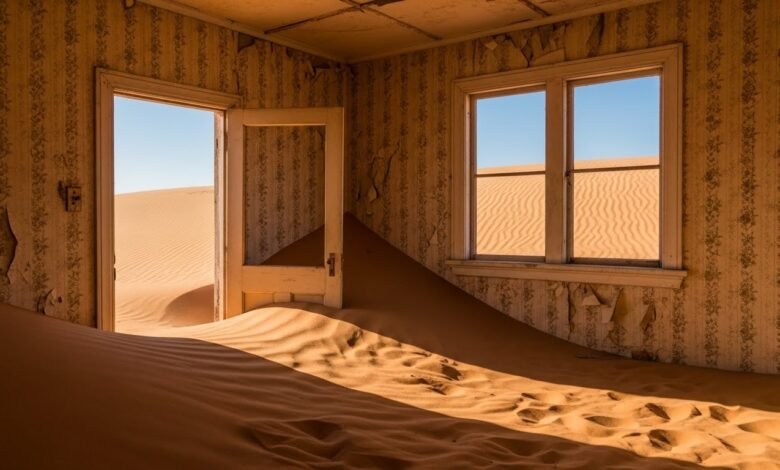
Located in the Namib Desert, Kolmanskop is perhaps the most visually striking ghost town on Earth. Once a thriving diamond mining town in the early 1900s, it boasted a casino, a bowling alley, and the first X-ray station in the Southern Hemisphere.
When the diamonds ran out in the 1950s, the desert reclaimed the town. Today, the stately German architecture is drowning in sand. Dunes have broken through doors and windows, filling bedrooms and ballrooms.
Visiting Tips
- Permits: You need a permit to enter, which can be bought in the nearby town of Lüderitz.
- Best Time: Go at sunrise. The lighting on the sand inside the pastel-colored rooms is world-class for photography.
- Safety: Watch out for snakes and loose floorboards.
2. Craco, Italy
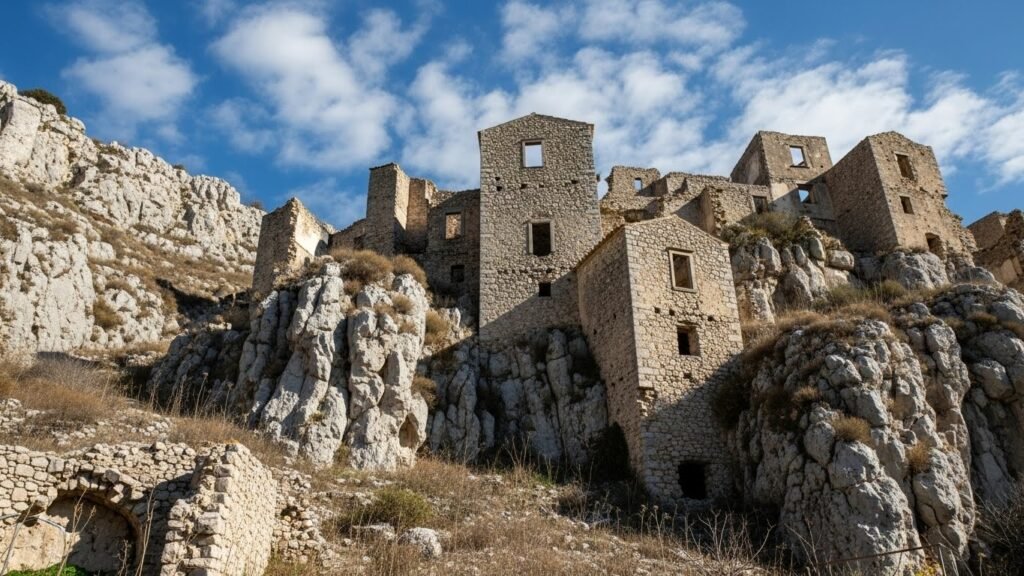
Perched on a cliff in the region of Basilicata, Craco looks like it was carved directly out of the mountain. This medieval village dates back to the 8th century but was abandoned in the late 20th century due to recurring landslides and earthquakes.
Unlike the wooden ghost towns of the USA, Craco is a stone fortress. Its empty tower, collapsed palazzos, and narrow winding streets are incredibly atmospheric. It is so cinematic that it was used as a filming location for The Passion of the Christ and Quantum of Solace.
The Experience
You cannot wander Craco alone due to safety risks (falling masonry). You must join a guided tour, where you will wear a hard hat and explore the ruins while learning about the geological instability that doomed the village.
3. Bodie, California, USA
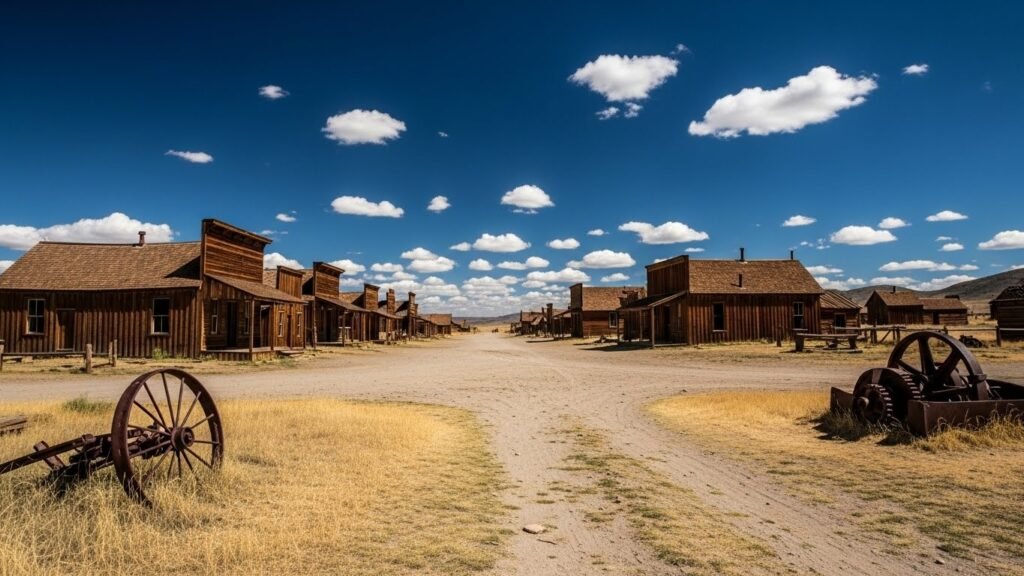
If you want the authentic Wild West experience, forget the theme parks and head to Bodie. Maintained by the California State Parks system in a state of “arrested decay,” Bodie is the gold standard of American ghost towns.
In the 1870s, it was a booming gold rush town known for its saloons, gunfights, and lawlessness. By the 1940s, it was empty. Today, over 100 buildings remain. What makes Bodie special is that the interiors are left as they were. You can peer through windows and see stocked general store shelves, school desks with books, and pool tables waiting for a game.
The Curse of Bodie
Legend has it that anyone who takes an item from Bodie—even a rusty nail or a rock—will be cursed with bad luck. Park rangers regularly receive letters from former visitors returning stolen items, begging for the curse to be lifted.

4. Humberstone and Santa Laura, Chile
In the inhospitable Atacama Desert lie the saltpeter works of Humberstone and Santa Laura. These UNESCO World Heritage sites were once home to thousands of workers who mined “white gold” (nitrate) for fertilizer and explosives.
The dry desert air has preserved the site remarkably well. You can walk through the skeleton of the majestic theater, the swimming pool (built from cast iron from a shipwreck), and the workers’ living quarters. It is a stark reminder of the industrial age and the harsh conditions laborers endured.
The Vibe
Humberstone is massive and can feel overwhelming. The wind whistling through the corrugated iron structures creates an eerie soundtrack to your walk. It is less “romantic” than Craco but deeply impressive in scale.
5. Kayaköy, Turkey
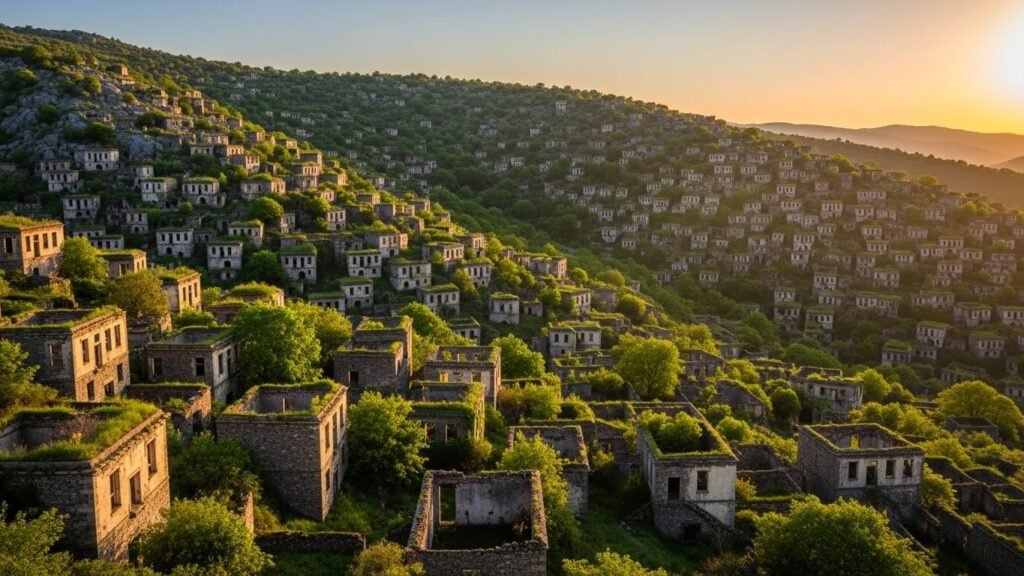
While many ghost towns were abandoned due to economics, Kayaköy was emptied by politics. Following the Greco-Turkish War in 1923, a population exchange forced the Greek Orthodox residents of this town (then called Levissi) to leave their ancestral homes.
They left behind a hillside covered in hundreds of stone houses, two large churches, and schools. The incoming Turkish population chose not to inhabit the Greek-style hillside homes, leaving them to crumble. Today, it is a “village of peace and friendship,” serving as a monument to the human cost of conflict.
The Ethics of Visiting Abandoned Places
Urban exploration requires a specific code of ethics. When visiting these fragile sites, remember the golden rule: “Take nothing but pictures, leave nothing but footprints.”
1. Don’t Break In
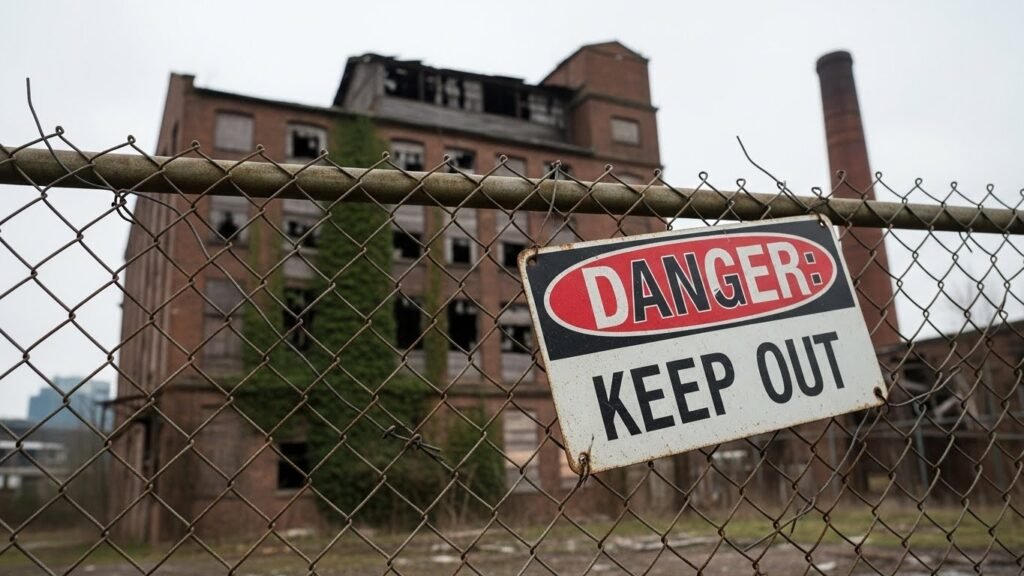
The sites listed above are legal to visit and often require tickets. Do not trespass on private property or break locks to enter closed buildings. It gives the UrbEx community a bad name and can get you arrested (or hurt).
2. Don’t Vandalize
Graffiti has no place in a historical ghost town. Carving your name into a 100-year-old wooden wall destroys the history for everyone else.
3. Safety First
Structures in ghost towns are unstable. Roofs can collapse, and floorboards can rot. Stick to marked paths where they exist. If a building looks unsafe, do not enter it for the sake of a photo.
Conclusion
Ghost towns are more than just creepy locations for horror stories. They are poignant monuments to change. They remind us that nothing lasts forever—not the gold rush, not the diamond boom, and not the political borders of the past.
Visiting these places offers a rare chance to step out of the noise of the modern world and listen to the whispers of history. So, pack your camera, grab some sturdy boots, and go explore the silence.