When most people think of a “festival,” they imagine standing in a muddy field listening to live music, eating street food, or watching fireworks. These are standard, enjoyable cultural experiences. But for the traveler with a taste for the eccentric, the world offers festivals that are far more confusing, dangerous, and downright hilarious.
Across the globe, communities gather annually to celebrate traditions that defy logic. From chasing a wheel of cheese down a near-vertical cliff to jumping over newborn babies, these events are a testament to human creativity and our collective need to let loose.
If you are tired of the usual music festivals and tourist parades, this guide is for you. We are diving into the weirdest, wildest, and most unique festivals on the planet. These aren’t just parties; they are cultural phenomena that you have to see to believe.
Why Attend a Bizarre Festival?
Why fly halfway across the world to watch people carry their wives through an obstacle course? Because it offers an unfiltered look into local culture. Standard tourism is often polished and performative. These festivals, however, are raw. They are steeped in folklore, history, and a healthy dose of local humor.
Attending these events allows you to participate, not just observe. It connects you with locals in a way that visiting a museum never could. You stop being a spectator and become part of the madness.
1. Cooper’s Hill Cheese-Rolling and Wake (Gloucestershire, UK)
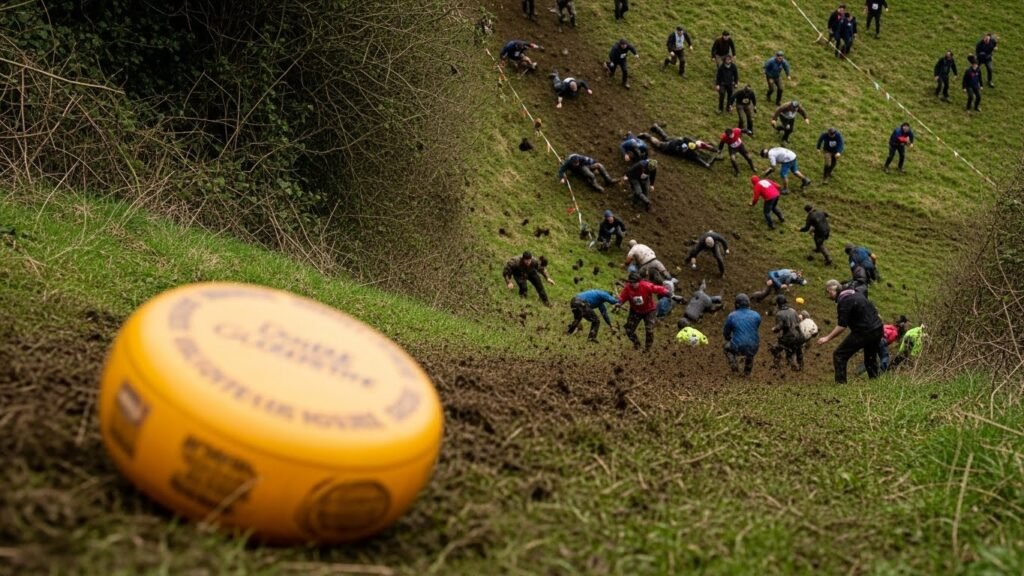
If you value your limbs, you might want to sit this one out. Held every Spring Bank Holiday at Cooper’s Hill near Gloucester, this event is arguably the most dangerous footrace in the world.
The premise is simple: a 9-pound round of Double Gloucester cheese is sent rolling down an incredibly steep, uneven hill. A second later, dozens of competitors throw themselves down the mountain after it. The first person to cross the finish line at the bottom wins the cheese.
The Danger Factor
The hill is so steep that staying on your feet is impossible. Competitors tumble, somersault, and crash their way down. Injuries are common, ranging from sprained ankles to broken bones, yet thousands of spectators turn up every year to watch the carnage. It is a glorious display of British eccentricity and grit.
2. El Colacho: The Baby Jumping Festival (Castrillo de Murcia, Spain)
Spain is famous for its festivals (fiestas), but El Colacho is in a league of its own. Taking place in the village of Castrillo de Murcia, this festival dates back to 1620 and blends Catholic tradition and folklore.
The main event involves men dressed as the Devil (El Colacho) in red and yellow jumpsuits, wielding whips. They run through the streets insulting locals. But the climax is the “salto del bebé.” Mattresses are laid out in the street, and babies born in the previous year are placed upon them. The “devils” then run and jump over the babies.
Is it Safe?
While it looks terrifying to outsiders, the tradition is believed to cleanse the babies of original sin and protect them from illness. Injuries to the babies are unheard of (the devils are very athletic), but it remains one of the most visually shocking festivals in Europe.
3. The Monkey Buffet Festival (Lopburi, Thailand)
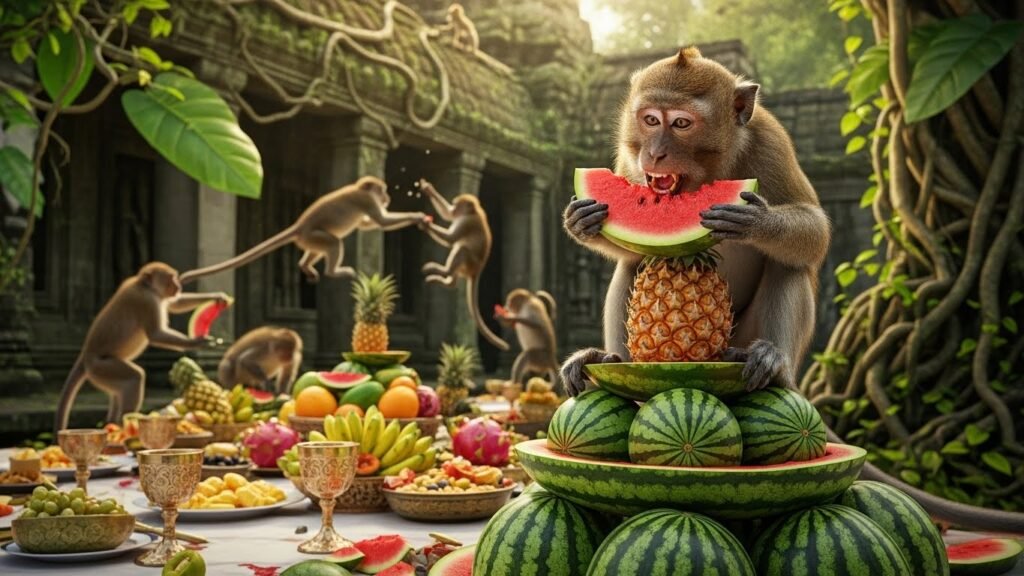
In most cities, monkeys are pests. In Lopburi, Thailand, they are guests of honor. Held annually in November, the Monkey Buffet Festival is exactly what it sounds like: a five-star banquet laid out for the thousands of long-tailed macaques that live in the city’s ancient Khmer ruins.
Locals set up long tables laden with tons of fruit, sticky rice, vegetables, and desserts. The monkeys are invited to feast. The result is absolute chaos. Monkeys swarm the tables, throwing food, climbing on tourists, and fighting over the best bananas.
Why Do They Do It?
The festival is a way of thanking the monkeys, who are believed to bring good luck and tourism revenue to the area. For visitors, it is a surreal photo opportunity, provided you don’t mind a monkey climbing on your head to steal your sunglasses.
4. Wife Carrying World Championship (Sonkajärvi, Finland)
The Finns are known for their unique sports (like mobile phone throwing), but “Wife Carrying” (Eukonkanto) is the most famous. The legend dates back to a 19th-century brigand named Rosvo-Ronkainen, who required his thieves to be strong enough to carry sacks (or women) on their backs.
Today, it is a serious athletic competition. Male competitors race through a 253-meter track filled with sand, grass, and a deep water pool, all while carrying a female teammate. The most popular technique is the “Estonian Carry,” where the woman hangs upside down with her legs around the man’s neck.
The Prize
The winner receives the weight of the wife in beer. It is a grueling physical challenge masked as a joke, attracting competitors from Australia, the USA, and across Europe.
5. Kanamara Matsuri (Kawasaki, Japan)
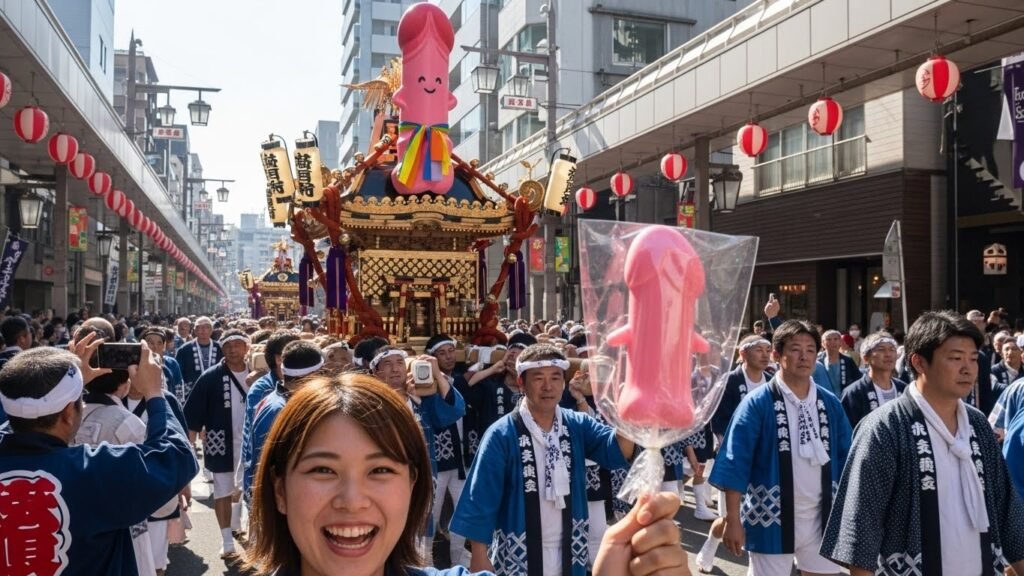
Japan is often viewed as a polite, reserved society. The Kanamara Matsuri, or “Festival of the Steel Phallus,” turns that stereotype on its head. Held each spring in Kawasaki, this Shinto festival is dedicated to fertility, long marriage, and protection from sexually transmitted infections.
The centerpiece of the parade is a giant, pink, phallus-shaped shrine carried through the streets by enthusiastic crowds. Festival-goers can buy phallus-shaped lollipops, carved vegetables, and souvenirs.
The Meaning
While it creates plenty of giggles for tourists, the festival has serious roots and is a major fundraiser for HIV/AIDS research. It is a celebration of life and reproduction, delivered with a unique Japanese sense of humor.
6. The Boryeong Mud Festival (South Korea)
What started as a marketing stunt to sell cosmetics has turned into South Korea’s biggest international party. The Boryeong Mud Festival takes place on Daecheon Beach, where the local mud is rich in minerals and good for the skin.
The beachfront is transformed into a giant mud park, featuring mud slides, mud wrestling pits, and a “mud prison.” Millions of visitors, mostly young travelers and expats, descend on the town to get absolutely covered in grey sludge.
It’s Not Just Dirt
At night, the festival turns into a massive beach party with K-pop concerts and fireworks. It is a spa treatment meets spring break. If you go, do not wear anything you want to keep white.
Practical Survival Tips for Weird Festivals
Attending these events requires more preparation than a standard trip. Here is how to survive the madness.
Book Early
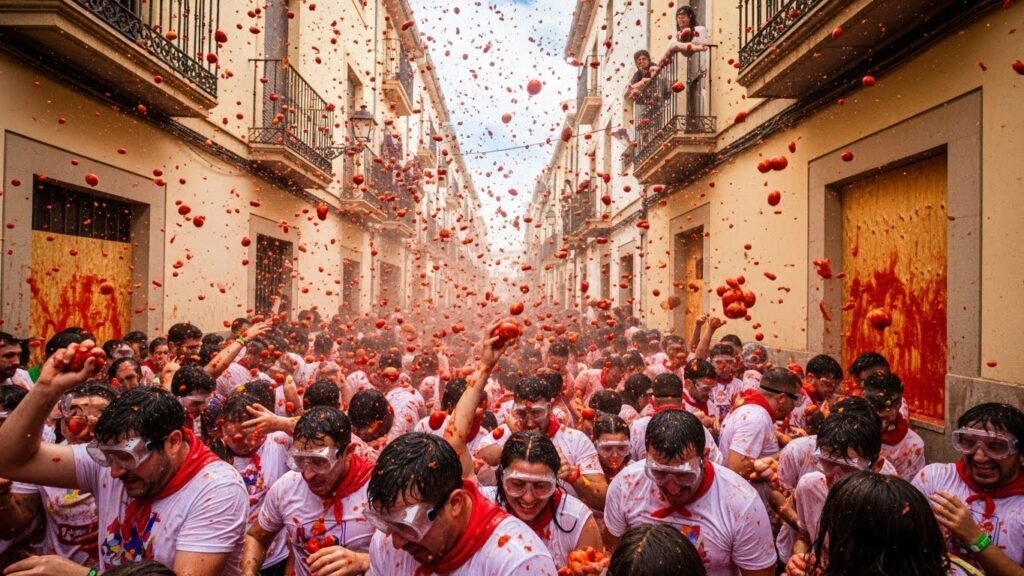
These festivals are often held in small towns (like Buñol for La Tomatina or Sonkajärvi for Wife Carrying) that lack enough hotels to accommodate the influx of tourists. Accommodation usually sells out six months in advance. Plan to stay in a neighboring city and commute.
Dress Appropriately
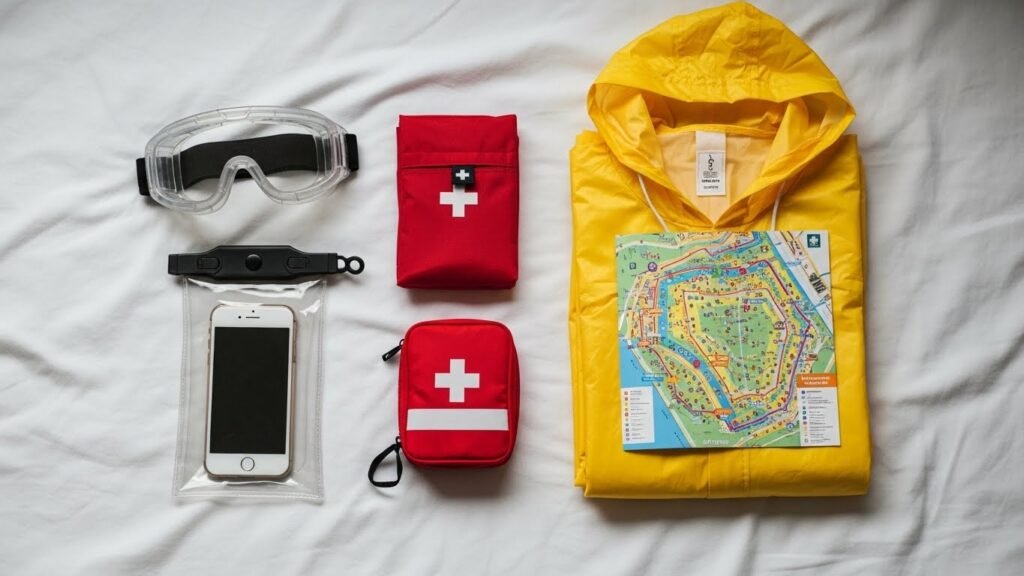
- La Tomatina: Wear goggles (tomato acid burns eyes) and old clothes.
- Cheese Rolling: Wear shoes with serious grip.
- Water Festivals (like Songkran): Waterproof your phone and electronics.
Respect the Culture
Even though these festivals seem crazy, they often have deep religious or historical significance (like Kanamara Matsuri or El Colacho). Laugh with the locals, not at them. Participate in the spirit of the event, but follow the rules. If a local tells you not to stand in a specific spot, move immediately—they know where the bull/cheese/whip is coming from.
Conclusion
The world is too fascinating to spend it all in resort swimming pools. These bizarre festivals offer a chance to see humanity at its most playful, resilient, and strange.
Whether you are dodging tomatoes in Spain or carrying your partner through a pool in Finland, these experiences become the stories you tell for the rest of your life. So check the dates, pack your bags, and get ready to embrace the weirdness.